Improving subscription conversion
in the loyalty program
Sber
Company
SberSpasibo
Product
Role
Sep 2023 – Nov 2024
Years
Overview
SberSpasibo is the loyalty program within the Sber ecosystem, one of the largest digital ecosystems in the market.
While the broader Sber ecosystem serves over 95 million users, SberSpasibo itself had around 40 million monthly active users, making it the largest loyalty program in CIS at the time.
Loyalty products traditionally operate as cost centers, so one of the key strategic business goals was to improve monetization by converting active users into SberPrime subscribers.
This created a major product opportunity:
we had access to nearly 20 million non-subscriber monthly users who regularly engaged with cashback and loyalty flows.
The projected business impact was significant — potentially up to 1 million new subscription users.
My Role
I led the end-to-end design process, including:
Product discovery
UX strategy
Prototyping
Usability testing
Concept iteration
Stakeholder presentation and concept defense
Challenge
—
The Challenge
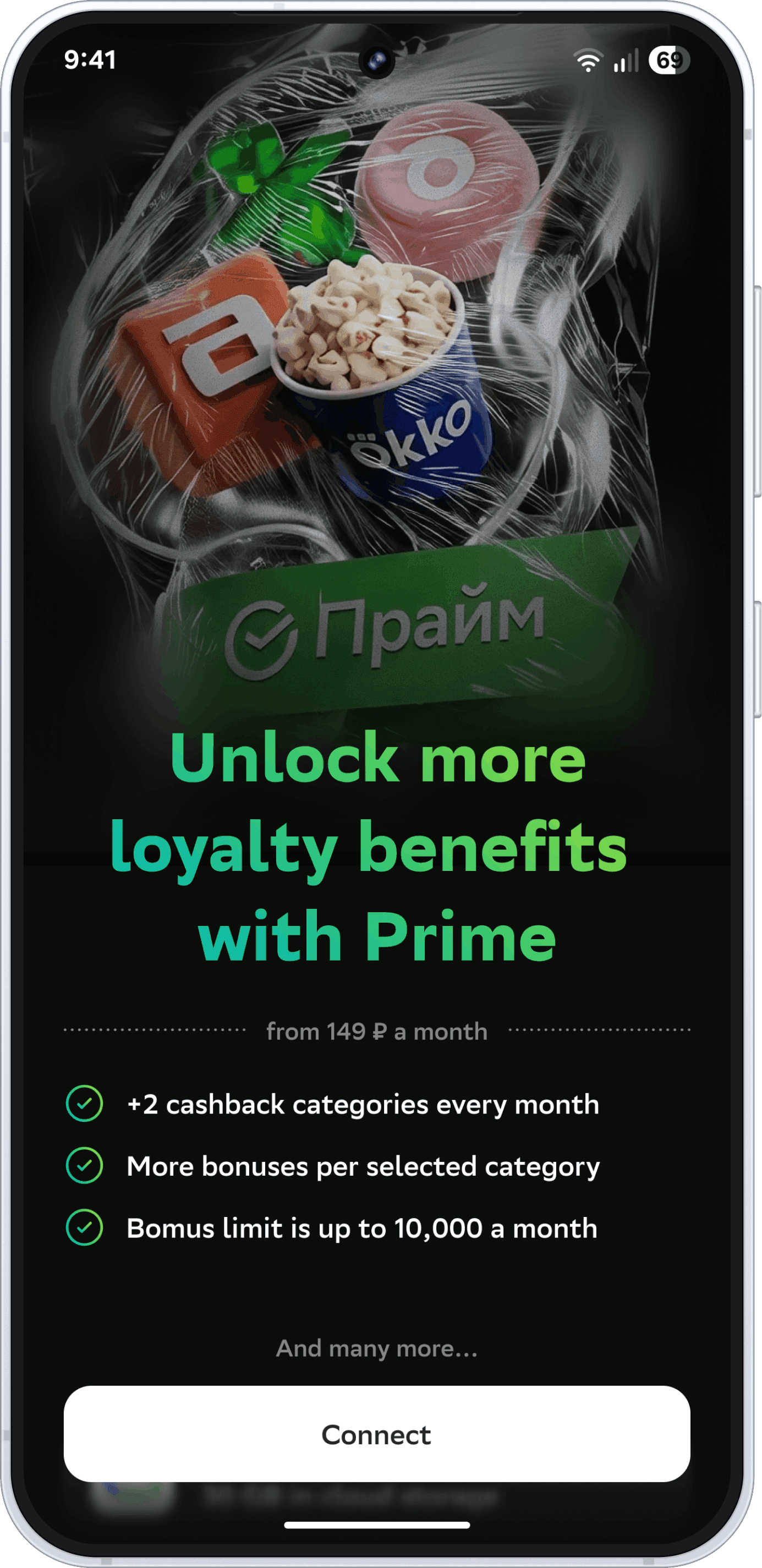
The most obvious solution was to introduce promotional banners for SberPrime directly into the loyalty section.
This was already a common approach across other ecosystem products.
However, the challenge was more complex.
At the same time, the product was undergoing two major transformations:
📐
Migration to the new SBOL-2025 design system
🔀
Backend migration to a new technology stack
Approach
Because these changes were already highly structural, we decided not to approach the task as a simple promotional integration.
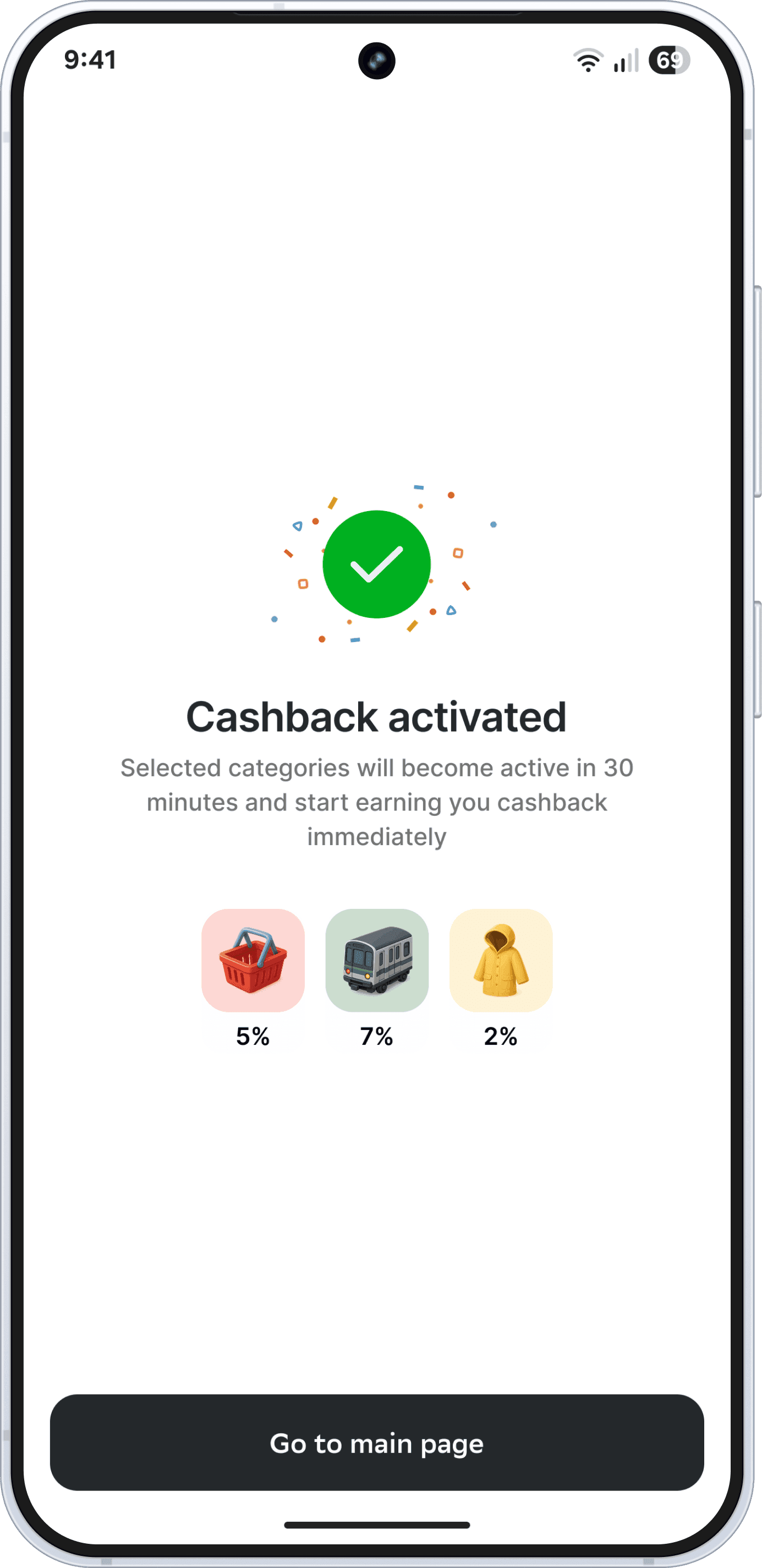
Instead, we used this moment to fully redesign the core cashback activation experience, including the main screen and the primary activation flow.
The key design challenge became:
🤔
Strategy
—
Research Approach
Because we were planning a full redesign, I wanted to validate design decisions through usability testing rather than rely on assumptions.
The first step was to establish a behavioral baseline.
I recreated the current production flow as a clickable prototype and ran usability testing to measure how users interacted with the existing experience.
We measured four core metrics:
🏆
Success rate
Percentage of users completing cashback activation
⏳
Efficiency
Time user spends to complete the core task
😊
Satisfaction
Perceived usability and clarity across testing experience
💎
Subscription value recall
Users' ability to explain the benefits of Prime after testing
Key Insight
The biggest finding came from post-test interviews.
Despite seeing Prime banners within the flow, only 2 out of 10 users could clearly explain what value the subscription actually provided.
This revealed an important insight:
💡
Traditional banner placement generated visibility, but failed to communicate value
Users either ignored the banners or did not connect them to their immediate goals.
This became the turning point of the concept.
Design Solution
—
The Idea
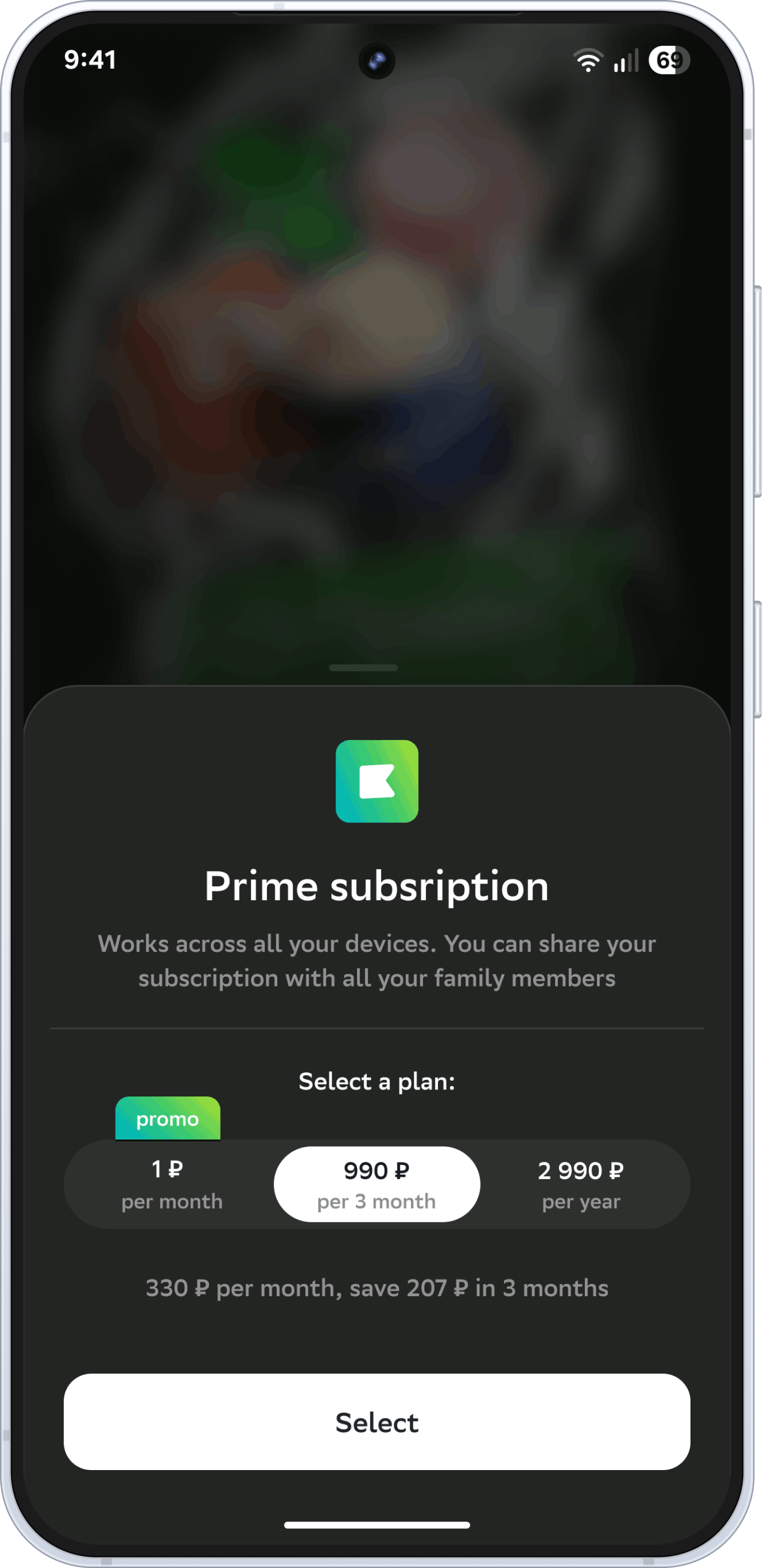
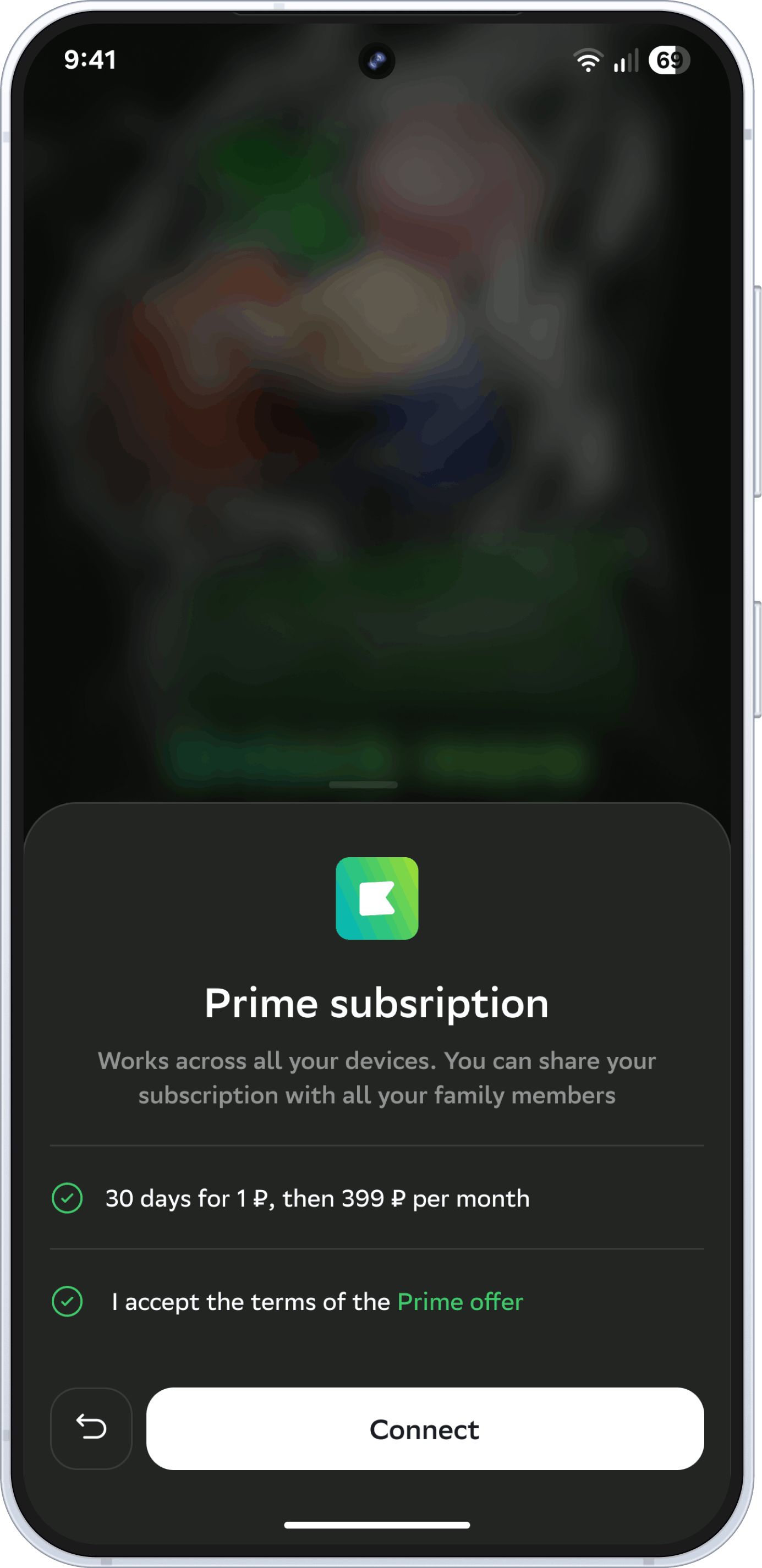
Instead of using interruptive banner placements, I shifted the approach toward contextual value-driven entry points.
Show Prime exactly where the benefit becomes immediately relevant to the user’s current task
Rather than advertising the subscription as a separate product, we embedded it directly into moments of user intent.
This led to three contextual entry points.
Solution 1.
More Cashback Categories
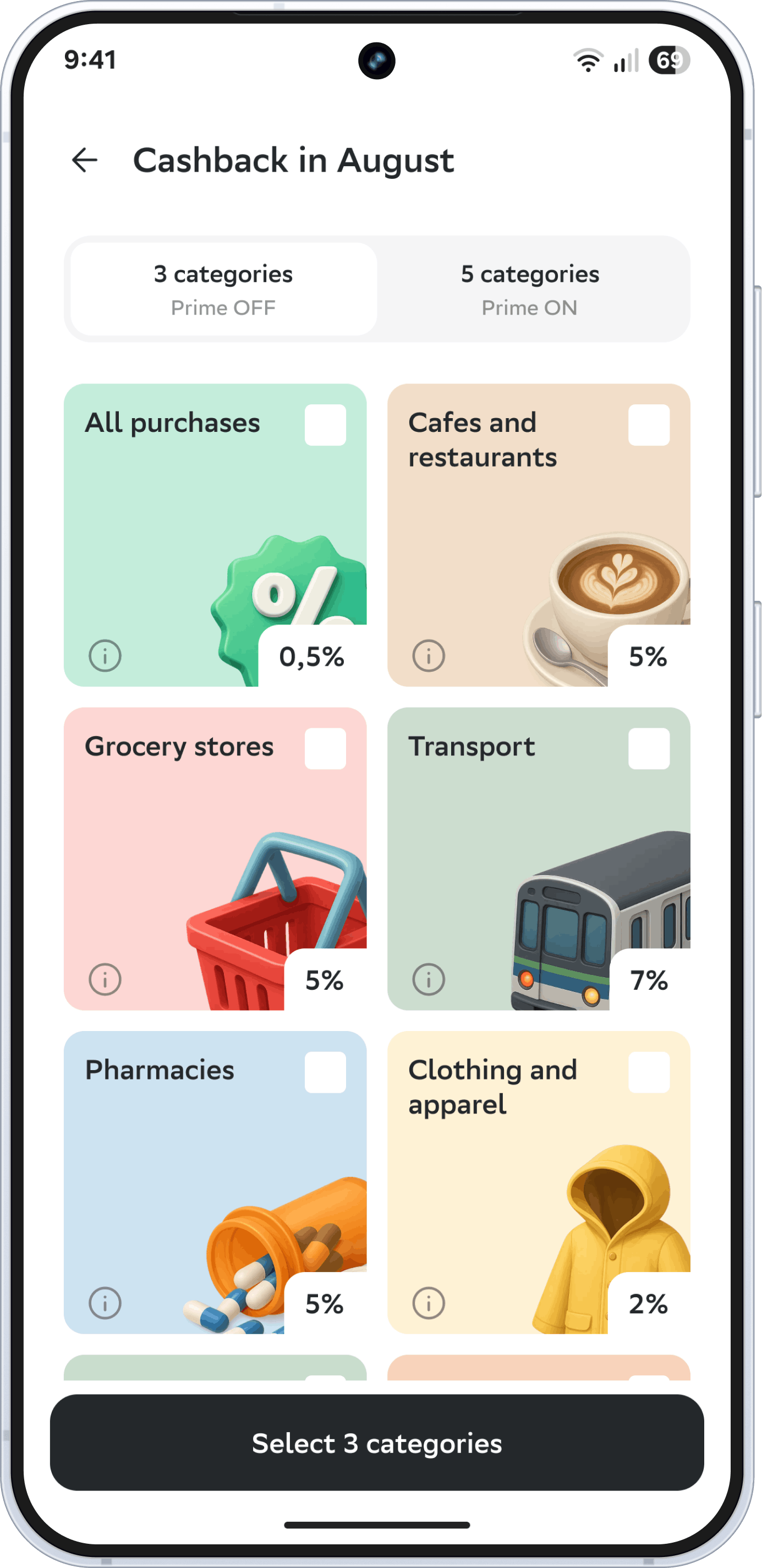
By default, users could activate 3 cashback categories. Prime subscribers could activate 5 categories.
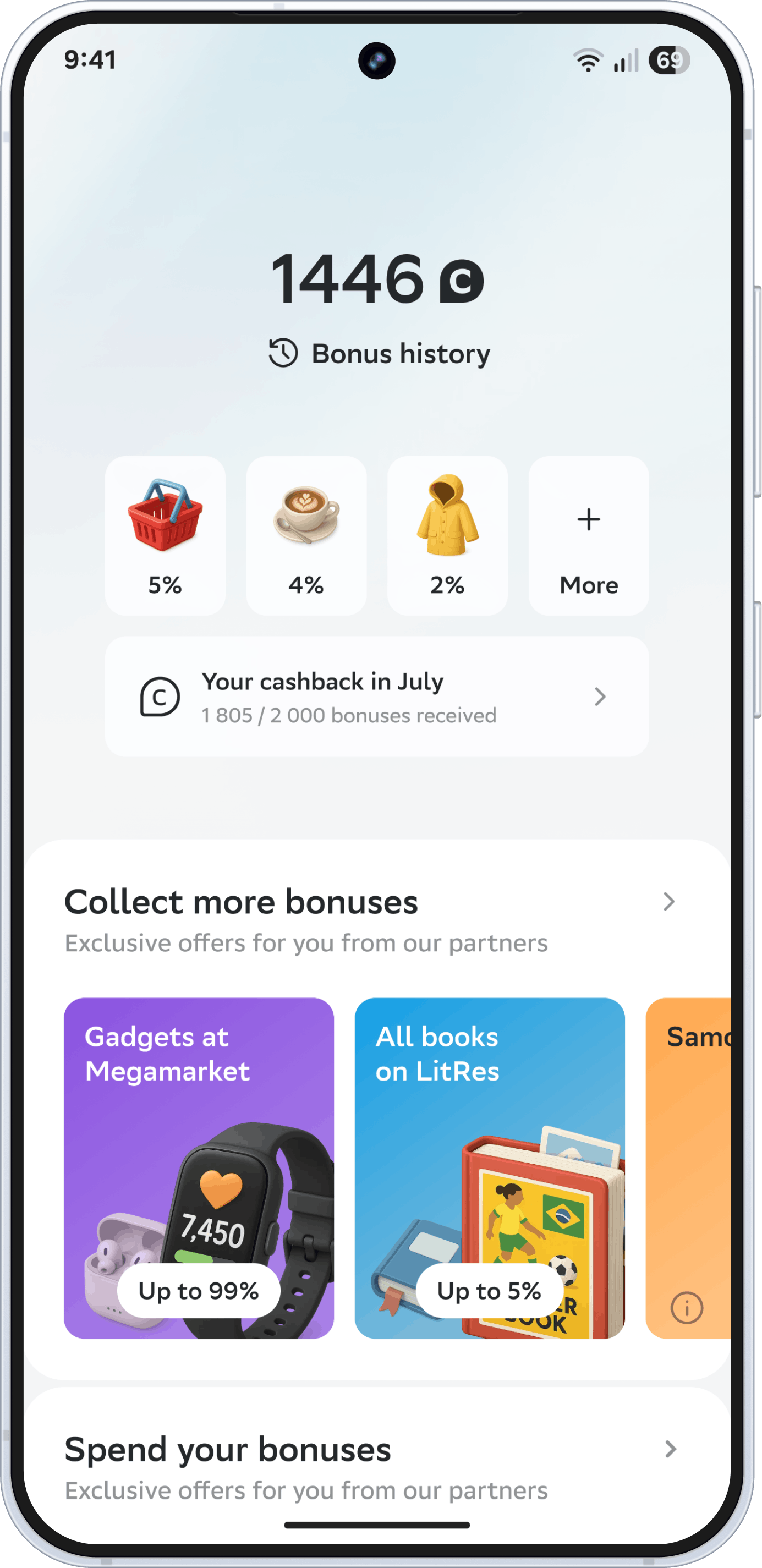
On the main screen, I introduced a clear visual affordance that highlighted the opportunity to expand the number of active categories. This made the subscription benefit concrete and instantly understandable.
Instead of abstract messaging, users saw an immediate upgrade path tied to their current action.
Solution 2.
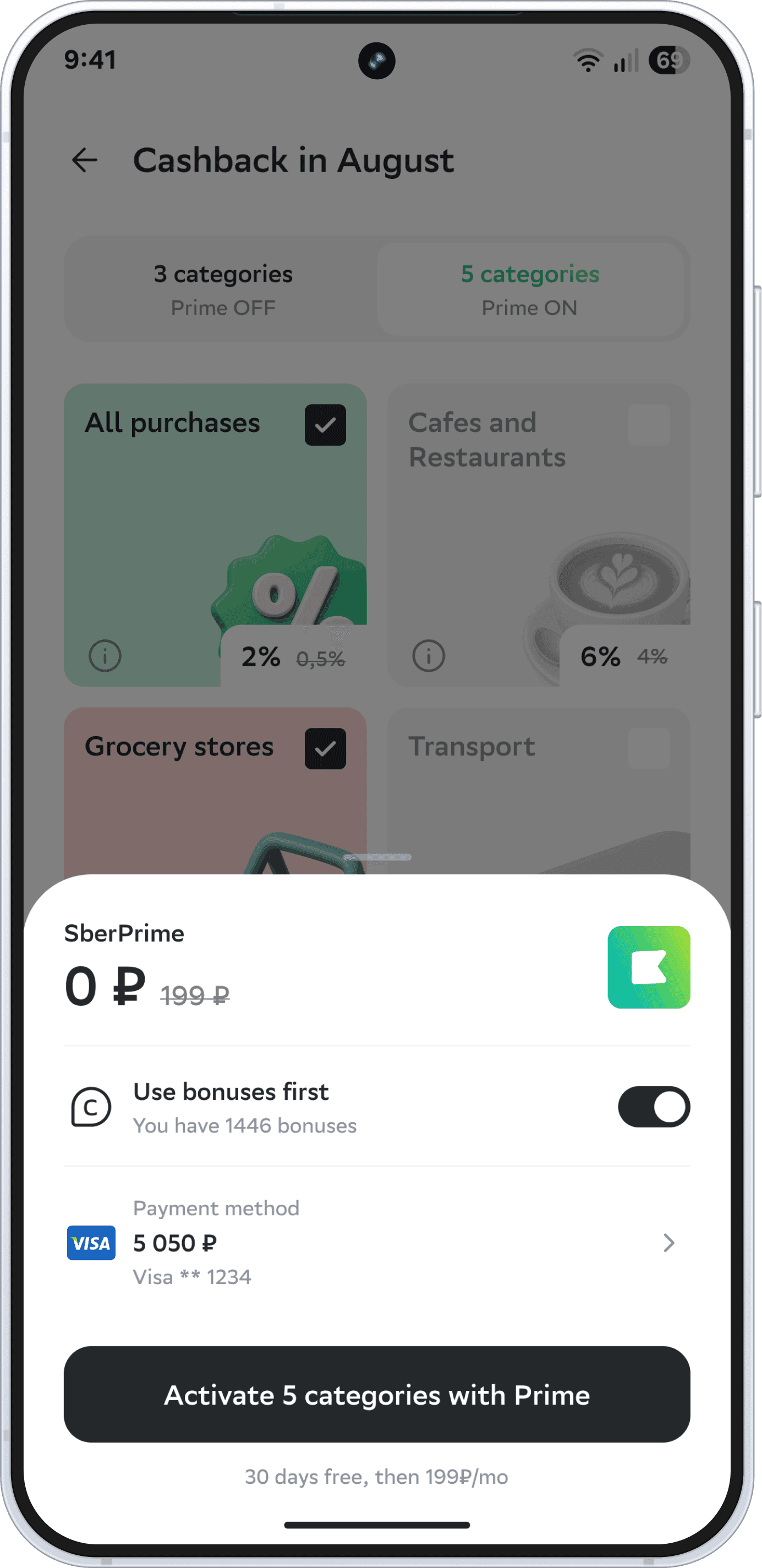
Integrated Into the Core Activation Flow
This became the strongest entry point. Inside the cashback activation flow, users could switch between:
3 categories without Prime and 5 categories with Prime
This comparison was fully interactive. Users could directly see:
more available categories
increased cashback rates
immediate benefit of upgrading
This transformed Prime from a marketing message into a visible side-by-side product comparison. The value proposition became self-explanatory.
Solution 3.
Bonus Limit Expansion for High-LTV Users
For high-value users approaching their monthly bonus limit, we introduced a highly contextual upgrade opportunity.
Standard users had a monthly limit of 2,000 bonus points.
Prime users could increase this to 10,000.
This solution specifically targeted users with high transaction frequency and strong ecosystem value.
It was the least frequent entry point, but strategically the most valuable from an LTV perspective.
Results
—
=baseline
Success rate
Percentage of users completing the task
+35%
Efficiency (Time on task)
Time user spends to complete the task
85%
Satisfaction (CSAT)
Perceived usability and clarity
x4
Subscription value recall
Users' ability to explain the benefits of Prime after usability testing
Key Metric
Most importantly, the redesign improved subscription comprehension without negatively affecting the primary cashback activation flow.
This was critical, as protecting the main user journey was a key success criterion.
Conclusion
—
Outcome
The concept was successfully approved by stakeholders and moved into production.
The final design is now live in the product.
Reflection
This project reinforced an important product design principle for me:
Rather than asking users to “learn about Prime,” we helped them discover its value at the exact moment it became useful.
That shift — from promotion to contextual utility — was the key driver behind the outcome.
🎓